The DSM defines Generalized Anxiety Disorder (GAD) as:
1. The presence of excessive anxiety and worry about a variety of topics, events, or activities. Worry occurs more often than not for at least 6 months and is clearly excessive.
I’m good at worrying about things, paranoia, anxiety etc. My mom taught me that. Don’t forget. Wear a raincoat. Check your work. Don’t go out alone.
I went to lunch alone sometimes, in high school. She didn’t like that. But it was a short walk to the deli. There was a guy there who knew my name, my favorite sandwich, who gave me free cookies, who wanted to go to a concert with me “sometime,” who tripped over things in his rush to talk to me.
I woke up that morning. And I couldn’t stop thinking about death. This happens sometimes when a thought appears and won’t melt away. Gets caught in the cogs.
Paul Atreides: I know, Thufir, I’m sitting with my back to the door. I hear you, Dr. Yueh, and Gurney coming down the hall.
Thufir Hawat: Those sounds could be imitated!
I never keep my back to doors, always know who’s behind me, if someone’s behind me, I always walk with a weapon: a keychain that’s louder than a car alarm when the chain is pulled, police approved, emergency LED, makes a great gift. My metal water bottle held like a baseball bat by my side. Ready. On edge. Armed.
A. A persistent fear of one or more social or performance situations in which the person is exposed to unfamiliar people or to possible scrutiny by others. The individual fears that he or she will act in a way (or show anxiety symptoms) that will be embarrassing and humiliating.
It had snowed all night. Cars slid off driveways, and we drove on the highway at 10 miles an hour. We get to school when English starts instead of 7:30 when choir starts. The halls are empty. It’s never been this peaceful, I think. Yesterday’s snow has melted and frozen into ice.
However, less well-known is the fight-flight-freeze response, which adds a crucial dimension to how you’re likely to react when the situation confronting you overwhelms your coping capacities and leaves you paralyzed in fear.
I freeze up a lot. When I can’t remember a word, when I can’t remember my argument, with the boy I told to come to the tennis match and I spent an hour leaning against the fence with, talking with. But I’m afraid to look at him, later. And I don’t know why.
I hate getting phone calls.
2. The worry is experienced as very challenging to control. The worry in both adults and children may easily shift from one topic to another.
A. They sit down on the couch next to you.
“Oh also, I can’t make it to your birthday.”
“Oh, really?”
“Yeah, I have a hockey game in Manchester. I was pissed.”
Sometimes no one responds to my texts. They always do it at the same time. Conspiracy, my brain cries. They all hate you. Some things get caught in the cogs.
So does this mean you’re not gonna come?
B. We are leaving the dance. Two young girls in floral dresses in an empty subway station. A man leans over the turnstiles. We have to pass him. Vulnerable in floral. We have to fumble for our Charlie Cards. In front of him.
“Hurry up,” he says. “What are you fuckin’ scared of it?”
He is behind me. Close. The turn style is not what I’m scared of.
The adrenal medulla secretes the hormone adrenaline. This hormone gets the body ready for a fight or flight response. Physiological reaction includes increased heart rate.
Fuck off,” I say. “You probably shouldn’t have done that,” people will say, later.
The fight or flight response can be seen in all mammals in response to threats.
3. The anxiety and worry are accompanied with at least three of the following physical or cognitive symptoms (In children, only one symptom is necessary for a diagnosis of GAD):
A. Difficulty sleeping (due to trouble falling asleep or staying asleep, restlessness at night, or unsatisfying sleep)
In 8th grade, I cheated on a worksheet. Got all the answers from my friend. When the teacher asked me about it, I told him. I didn’t even think about lying. Still. The guilt ate me up.
Eat up, verb, To overwhelm and/or easily defeat one due to being more aggressive, powerful, etc. A noun or pronoun can be used between “eat” and “up.”
At night. That’s usually when I think about death. It’s a grinding, squeaking, circular thought. It always comes back. Big wheel keep on turning. Proud Mary keep on burning.
The wheel in the sky keeps on turning.
It is the nightly custom of every good mother after her children are asleep to rummage in their minds and put things straight for next morning, repacking into their proper places the many articles that have wandered during the day. When you wake in the morning, the naughtiness and evil passions with which you went to bed have been folded up small and placed at the bottom of your mind and on the top, beautifully aired, are spread out the prettier thoughts, ready for you to put on.
Each morning I had a few moments of peace before the guilt, my failure would stab me in the stomach. I finally told my parents. It wasn’t my job to worry about it alone. They said.
B. Exposure to the feared situation almost invariably provokes anxiety, which may take the form of a situationally bound or situationally predisposed Panic Attack.
When I was 11, I was afraid of zombies. Terrified. Scared that Michael Jackson backup dancers would climb up to my second-floor bedroom and slam their poorly preserved fists on the double-paned window.
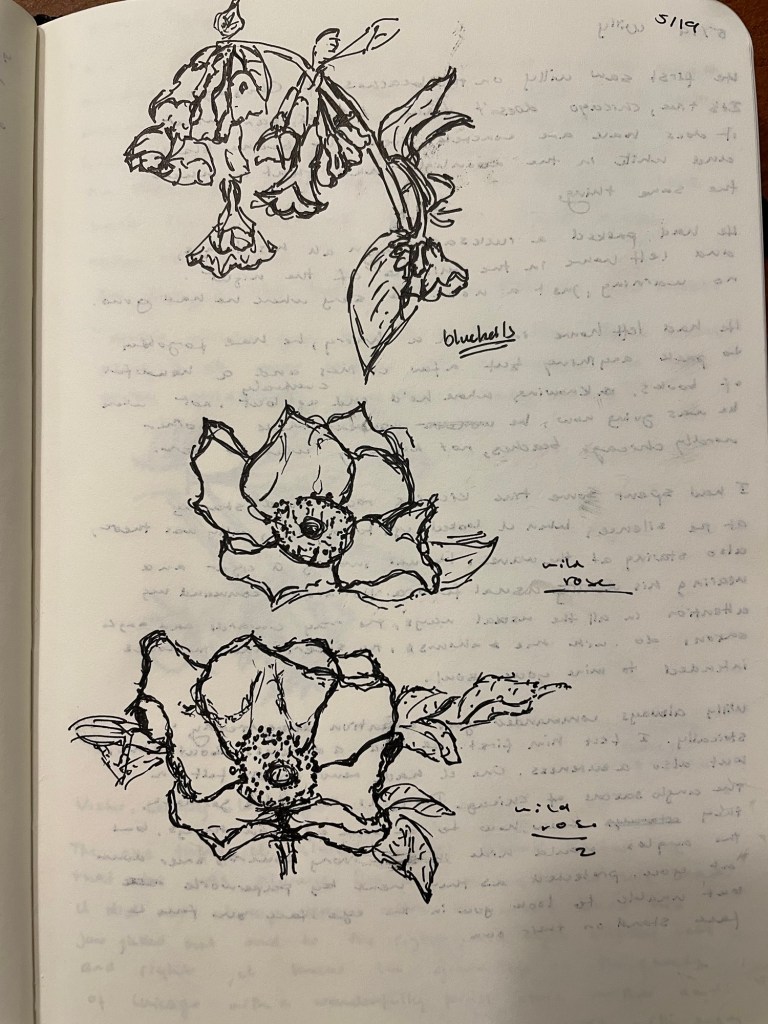
During the three weeks of Utah autumn, we used to collect leaves in big plastics bags and preserve them. Pressing them between sheets of plastic and letting mom seal them together with an iron.
We’re playing pool at 11 in a seedy pub in Inverness. The man at the next table is too sloshed to focus on his own game. That shot is shite. He says. But I won’t help her out. We know what that would look like. He’s funny, means no harm. But all I see is the man in the subway. What are you fucking scared of it? Experiencing over and over the moment paranoia became reality. The crossing over where don’t worry mom it’ll be fine loses its meaning.
Every year on Halloween they would show thriller again. I hid outside. Hid in the bathroom. Because each time it started, I knew the fear had been perfectly preserved, and I had no choice but to hide.
A mixture of these chemicals is known as embalming fluid and is used to preserve bodies of deceased persons for both funeral purposes and in medical research in anatomical laboratories.
C. The avoidance, anxious anticipation, or distress in the feared social or performance situation(s) interferes significantly with the person’s normal routine, occupational (academic) functioning, or social activities or relationships, or there is marked distress about having the phobia.
In 8th grade, there was a windstorm. The power was out all night. Half the shingles blew off our roof. Half the trees were knocked down or snapped in half. And in the Bible, there’s an untranslated word. I don’t remember what it was, but I said it again and again as I moved around the halls. As some reassurance. Hoping the house wouldn’t cave in because the floor was moving back and forth in the wind.
religion /rɪˈlɪdʒ(ə)n/ noun
1.
the belief in and worship of a superhuman controlling power, especially a personal God or gods.
We hung out behind the stairs in middle school. In 7th grade, Asher was shit talking the new testament, trying to impress his Jewish crush. I started to cry as I was telling him off. I wonder where that conviction went.
The lamb was sacrificed
Now we no longer fear the grave
delusion /dɪˈluːʒ(ə)n/ noun
1.
an idiosyncratic belief or impression maintained despite being contradicted by reality or rational argument, typically as a symptom of mental disorder.
The trees overhead made a great sound of letting down their dry rain.
4. The person recognizes that this fear is unreasonable or excessive.
 Nihilistic Porcupine